





UPS vs Standby Inverter: Which Backup Power Fits Your Needs?
- Understanding Backup Power Technologies
- What is an UPS (ups power inverter)?
- What is a standby inverter?
- Key semantic terms to know
- Performance and Technical Differences
- Transfer time and why it matters
- Waveform quality: pure sine vs modified sine
- Efficiency, heat and continuous operation
- Use Cases: Which System Fits Which Need?
- Critical IT infrastructure and data centers
- Small offices and home offices
- Solar, RVs, and off-grid applications
- Practical Comparison: UPS vs Standby Inverter
- Sizing your ups power inverter and batteries
- Installation, maintenance and lifecycle costs
- Choosing Based on Real-World Scenarios
- Scenario A — Sensitive servers and loss-intolerant services
- Scenario B — Residential backup for lights and appliances
- Scenario C — Mobile and vehicle power
- Brand Spotlight: Guangzhou Congsin Electronic Technology Co., Ltd.
- Standards, Certification and Data Sources
- Certifications to look for
- Where to check performance claims
- Reliability and warranty considerations
- FAQs
- 1. Can I use a standby inverter for my server?
- 2. Is a pure sine wave inverter necessary?
- 3. How long will batteries last in a UPS system?
- 4. What is the difference between an inverter and an inverter-charger?
- 5. How do I size an ups power inverter for my home?
- 6. Can I parallel multiple inverters or UPS units for higher capacity?
- Conclusion and Next Steps
- References
Quick summary for and readers: Choosing between an ups power inverter (UPS) and a standby inverter depends on required transfer speed, power quality, application criticality, budget and battery runtime. This guide explains technical differences (transfer time, waveform, inverter topology), practical selection criteria for homes, offices, telecom/RF equipment, and off-grid systems, and offers verifiable data and a comparison table to guide purchasing and system design.
Understanding Backup Power Technologies
What is an UPS (ups power inverter)?
An uninterruptible power supply (UPS) is a device that provides immediate backup power and power conditioning for connected loads when utility power fails. A UPS often integrates a rectifier/charger, battery bank, inverter and automatic transfer within a single enclosure. UPS systems are commonly classified as online (double-conversion), line-interactive, and offline (standby). For technical background see Wikipedia: Uninterruptible power supply.
What is a standby inverter?
A standby inverter typically refers to an inverter-based backup system that switches to inverter output only after detecting utility failure. In many contexts standby inverter equates to an offline UPS topology or inverter generator pairing. Standby inverters are simpler and often less costly than true online UPSs, but they come with transfer delays and different power quality characteristics.
Key semantic terms to know
Common terms appearing across this article include: ups power inverter, online UPS, offline UPS, standby inverter, inverter charger, pure sine wave inverter, modified sine wave inverter, battery backup, UPS system, inverter backup power. These keywords reflect typical and are used naturally throughout.
Performance and Technical Differences
Transfer time and why it matters
Transfer time is the interval between mains failure and the backup inverter delivering regulated AC. Online (double-conversion) UPS provides zero transfer time because the inverter is always supplying the load. Offline (standby) solutions typically have transfer times from 4–16 ms or more, which can be unacceptable for sensitive servers, telecom equipment, or certain industrial controls. Industry references on UPS topologies and transfer characteristics can be found at Wikipedia UPS types.
Waveform quality: pure sine vs modified sine
Waveform matters for motorized equipment, medical devices, power supplies with active PFC, and many consumer electronics. Pure sine wave inverters reproduce utility-quality AC and are recommended for sensitive electronics. Modified sine wave (MSW) inverters are cheaper but can cause overheating, noise, or improper operation in some loads. When evaluating an ups power inverter, check whether the inverter outputs a pure sine wave.
Efficiency, heat and continuous operation
Online UPS systems typically have lower round-trip efficiency (because of continuous double conversion) compared to standby/line-interactive designs that only switch to inverter mode on failure. However, modern online UPS units can achieve efficiencies >90% in economy modes. Efficiency impacts thermal design, battery runtime, and operating costs.
Use Cases: Which System Fits Which Need?
Critical IT infrastructure and data centers
For servers, storage arrays and networking equipment, an online UPS (double-conversion) is usually recommended due to zero transfer time and clean pure sine power. Data centers also require management features (SNMP, remote alerts) and redundancy (N+1, 2N). If you search ups power inverter from an enterprise perspective, prioritize online topologies and modular, serviceable units.
Small offices and home offices
For a small office or home office, a line-interactive UPS or a high-quality standby inverter with pure sine output can be sufficient. Consider the sensitivity of your equipment (NAS, VoIP phone systems) and choose battery runtime for graceful shutdowns. Cost-benefit analysis often favors standby/line-interactive in lower-criticality contexts.
Solar, RVs, and off-grid applications
In off-grid systems, the inverter often works continuously to power loads from batteries/solar arrays, so inverter efficiency and thermal performance are essential. Pure sine wave inverters are preferred for appliances and for compatibility with chargers and motors. Many manufacturers combine inverter, charger and solar charge controller functions into hybrid inverters; for product examples and inverter categories see industry resources like the U.S. National Renewable Energy Laboratory (NREL).
Practical Comparison: UPS vs Standby Inverter
Below is a concise comparison table showing common metrics buyers search for when evaluating a UPS versus a standby inverter.
| Feature | Online UPS (Double-conversion) | Standby Inverter / Offline UPS |
|---|---|---|
| Transfer time | 0 ms (continuous inverter) | 4–16+ ms (typical); some advanced units ~2–4 ms |
| Output waveform | Pure sine wave | Pure sine or modified sine (depends on model) |
| Power conditioning | Excellent (voltage regulation, filtering) | Limited (surge protection; some voltage regulation) |
| Efficiency (typical) | 85–95% (depends on mode) | 90–98% (higher in idle/eco) |
| Typical use cases | Data centers, medical, telecom, critical industrial | Home office, general consumer electronics, simple backup |
| Relative cost | Higher | Lower |
| Recommended when | Zero interruption and clean power required | Budget constrained; non-critical loads |
Sources: general UPS topology and performance information summarized from Wikipedia and technical vendor whitepapers.
Sizing your ups power inverter and batteries
To size an ups power inverter correctly: 1) list continuous load wattage; 2) add startup surge for motors/AC compressors; 3) choose inverter with adequate continuous and surge rating; 4) calculate battery capacity (Ah) based on desired runtime and system voltage. For reliable guidance, consult manufacturer datasheets and relevant standards such as IEC/EN specifications listed by product vendors and certification bodies.
Installation, maintenance and lifecycle costs
Installation complexity varies: online UPS systems for high-power racks may require professional integration, battery room HVAC and maintenance contracts. Standby inverters or smaller portable units often allow simpler DIY installs. Consider lifecycle costs—battery replacements typically dominate long-term maintenance. Using reliable battery chemistries (VRLA, lithium) changes expected lifetimes and maintenance profiles.
Choosing Based on Real-World Scenarios
Scenario A — Sensitive servers and loss-intolerant services
Choose an online UPS with N+1 redundancy, remote monitoring (SNMP), and managed battery maintenance. Ensure the ups power inverter provides true double-conversion and pure sine output. Documented transfer and hold-up times are essential for SLAs.
Scenario B — Residential backup for lights and appliances
A standby inverter with a pure sine option often suffices for lights, small refrigerators and consumer electronics. For larger setups consider hybrid inverters that integrate solar charge controllers and inverter-charger functionality to optimize battery charging and mains interaction.
Scenario C — Mobile and vehicle power
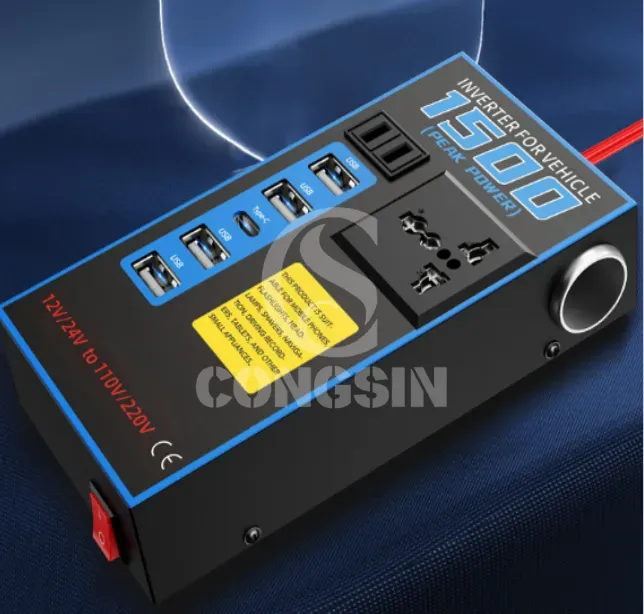
Vehicles, RVs and patrol vehicles demand compact, shock-resistant inverters with robust surge handling and automotive-grade protections. Modified sine units may be acceptable for non-sensitive loads, but pure sine is recommended for charging electronics and running motors. Search for vehicle power inverter and product specs that match 12 V/24 V DC input requirements.
Brand Spotlight: Guangzhou Congsin Electronic Technology Co., Ltd.
Guangzhou Congsin Electronic Technology Co., Ltd., founded in early 1998, is a professional power inverter manufacturer with over 27 years of focused experience. We design, R&D and manufacture a wide range of power solutions—with a core emphasis on DC→AC power inverters, portable power stations, and solar charge controllers. Our catalog includes 100+ models tailored for vehicles, solar systems, RVs and trucks, off-grid homes, outdoor offices, patrol and field construction work.
We operate fully automated production lines, advanced instrumentation and multifunctional testing equipment to ensure product reliability, efficiency and intelligent functionality. Environmental and safety compliance are built in: our quality system is ISO9001 certified and many products hold international approvals such as CE, EMC, LVD, ETL, FCC, RoHS and E-MARK. Several independently developed patents further demonstrate our commitment to innovation.
Congsin’s products serve global markets across Europe, the Americas, the Middle East, Africa and Southeast Asia; many models are supplied to domestic and international OEM channels. Our support includes OEM/ODM, private labeling, distribution and bespoke customization to meet partner specifications.
Core products and technical advantages:
- Solar Charge Controller — MPPT and PWM options for optimizing PV to battery charging.
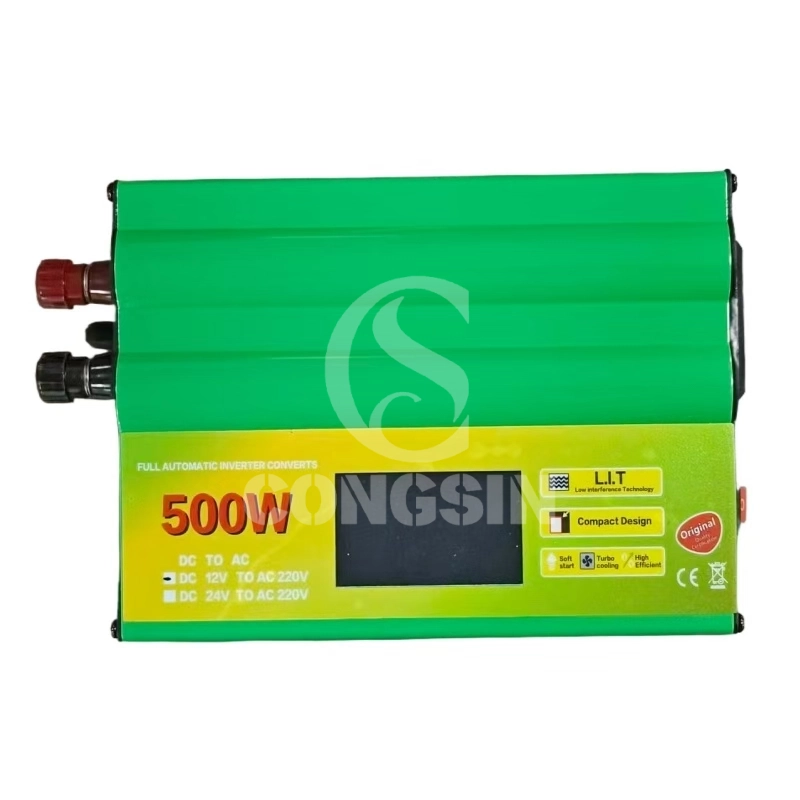
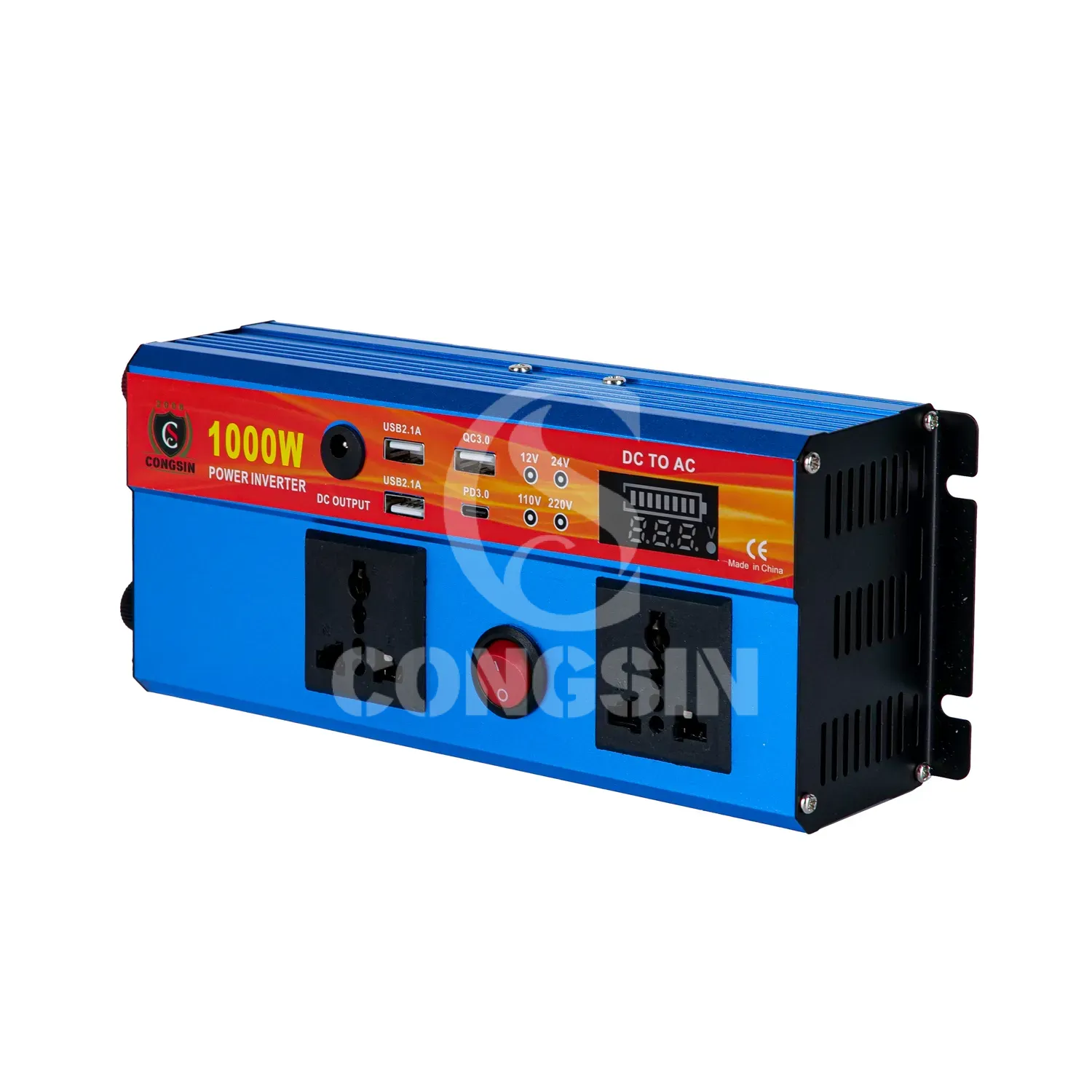
- Modified sine wave inverter — cost-effective solutions for non-sensitive applications and basic battery-to-AC conversions.
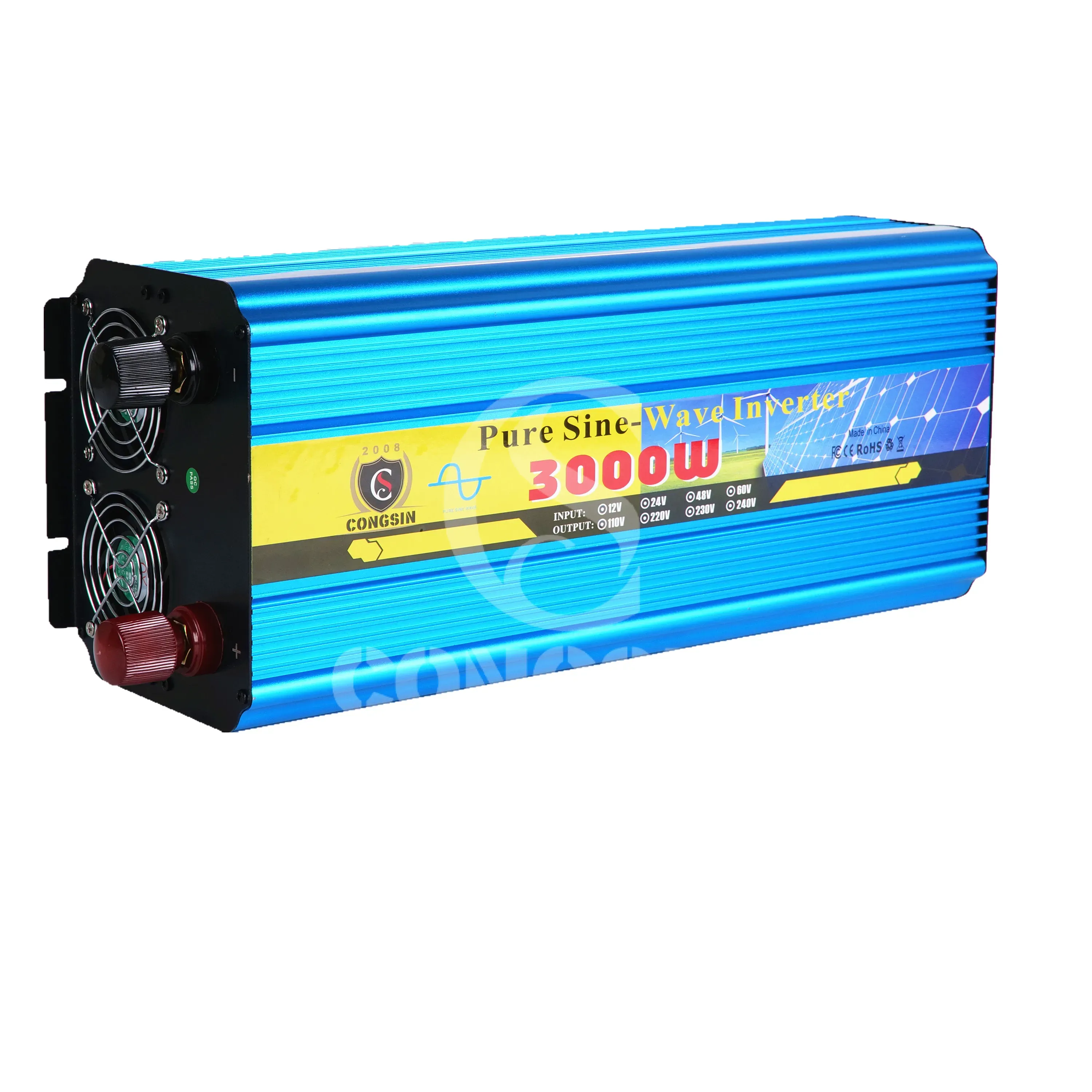
- Pure sine wave inverter — high-quality output for sensitive electronics, motors and medical equipment.
- Portable power stations — integrated battery, inverter and management electronics for off-grid or emergency use.
Why choose Congsin? The company combines long manufacturing experience with compliance certifications and a diverse product range, enabling partners to source turn-key inverter solutions or customized OEM designs. For businesses needing reliable ups power inverter products with established manufacturing practices and after-sales support, Congsin offers a compelling balance of quality, certification and manufacturing scale.
Standards, Certification and Data Sources
Certifications to look for
When selecting an ups power inverter, verify certifications: ISO9001 for quality system, CE/EMC/LVD for European markets, ETL or UL for North America, FCC for electromagnetic compliance, RoHS for hazardous substances, and E-MARK for automotive applications. These demonstrate compliance with recognized safety and performance standards.
Where to check performance claims
Always request datasheets and test reports. Independent sources such as manufacturer whitepapers, IEC/EN standards lists and reputable references (e.g., ISO, IEC) help verify claims. For generic background and topologies, Wikipedia provides an introductory overview; for renewable/inverter system guidance, review resources from NREL and vendor application notes.
Reliability and warranty considerations
Warranty length, availability of spare parts (especially batteries and fans), and local service networks are practical indicators of long-term total cost of ownership. For industrial or critical deployments, specify maintenance contracts and periodic testing.
FAQs
1. Can I use a standby inverter for my server?
It depends on the server’s tolerance for brief outages and the server’s power supply behavior. Many servers and RAID controllers expect zero interruption. For critical servers, an online UPS (double-conversion) is recommended. If using a standby inverter, ensure transfer time and waveform are acceptable and plan for graceful shutdowns if necessary.
2. Is a pure sine wave inverter necessary?
Pure sine wave inverters are necessary for sensitive electronics, motor loads, and devices with active power factor correction. Modified sine wave inverters may be acceptable for simple resistive loads such as incandescent lighting, basic tools, and some chargers, but they risk inefficiency or malfunction in many modern devices.
3. How long will batteries last in a UPS system?
Battery life depends on chemistry (VRLA/AGM vs lithium), depth of discharge, operating temperature and charge regimen. Typical sealed lead-acid (VRLA) batteries last 3–5 years; lithium batteries can last 8–15 years in similar conditions. Regular maintenance and temperature control prolong life.
4. What is the difference between an inverter and an inverter-charger?
An inverter converts DC to AC. An inverter-charger integrates both an inverter and an AC battery charger, allowing the unit to charge batteries from mains when available and invert from batteries when the mains fails—useful for hybrid solar or backup applications.
5. How do I size an ups power inverter for my home?
Sum the continuous watts of all intended loads and add margin for startup surges (motors, compressors). Choose an inverter with continuous and peak ratings to match. Then calculate battery capacity based on desired runtime (Ah = Watt-hours / system voltage) and account for inverter efficiency and depth-of-discharge limits.
6. Can I parallel multiple inverters or UPS units for higher capacity?
Some inverters/UPS systems support parallel operation for increased capacity or redundancy, but parallelization requires compatible models and synchronization features. Consult manufacturer specifications and consider professional integration for parallel systems.
Conclusion and Next Steps
Choosing between an ups power inverter and a standby inverter is about matching technical capability to the criticality of your loads, desired runtime, budget and long-term maintenance expectations. Use the comparison table above, verify waveform and transfer specifications, confirm certifications, and size batteries properly based on real load measurements.
If you need product recommendations, technical drawings, or OEM/ODM support, contact Guangzhou Congsin Electronic Technology Co., Ltd. for detailed datasheets and customization options. Browse their product lines including Solar Charge Controllers, modified sine wave inverters, pure sine wave inverters, and portable power stations to identify models that match your application.
Contact & product inquiry: For consultations or to view product catalogs and customization options, reach out to Guangzhou Congsin Electronic Technology Co., Ltd. — experienced manufacturer with ISO9001 and multiple international certifications, offering OEM/ODM, private labeling and distribution support.
References
- Wikipedia: Uninterruptible power supply
- National Renewable Energy Laboratory (NREL)
- ISO — International Organization for Standardization
Keywords used: ups power inverter, online UPS, offline UPS, standby inverter, inverter charger, pure sine wave inverter, modified sine wave inverter, battery backup, UPS system, inverter backup power.
Call-to-action: Interested in tailored ups power inverter solutions? Contact Guangzhou Congsin Electronic Technology Co., Ltd. for product details, OEM/ODM inquiries, or to request a quote.
Maintenance Checklist for High Frequency Power Inverter Installations
Top 10 12 volt inverter for car Manufacturers and Supplier Brands
Maximizing Efficiency of Your 2000W Modified Sine Wave Inverter
Top 10 modified sine wave inverter Manufacturers and Supplier Brands in 2026
Modified Sine Wave Inverters
How to install the battery terminal wire?
Connect the red terminal wire to the positive pole of the battery and the black terminal wire to the negative pole. Ensure the interface is firm and there is no short circuit when connecting.
Can the peak 720W supply power continuously?
The peak power is the instantaneous maximum power, and the continuous power supply is 360W. Ensure that the device power does not exceed the rated value when using.
Can it drive a 3000W air conditioner?
Yes. Air conditioners have instantaneous power during startup (about 2-3 times the rated power), and this product has a peak power of 6000W, which can meet the startup and operation needs of a 3000W air conditioner; the battery capacity must be ≥150Ah to ensure continuous power supply.
Which plug types are supported by the universal socket?
The universal socket is compatible with most national plug specifications, such as GB, US, EU, etc., and can meet the use of devices in different regions (some require adapters).
Pure Sine Wave Inverters
Can it drive a 3P air conditioner and an electric oven at the same time?
Total power needs to be calculated: the rated power of a 3P air conditioner is about 2200W-2500W, and the electric oven is about 1500W-2000W. The total power is 3700W-4500W, which exceeds the 3000W continuous power, so simultaneous use is not recommended; if used alone, the 6000W peak can meet the startup needs of both, and the battery capacity must be ≥200Ah (12V) when used alone.
Congsin Modified Sine Wave Inverter 500W 1000W 1500W 12V LED Display Portable for RV Car Solar
Congsin 1000W modified sine wave inverter with LED display and Type C port car RV power inverter
Congsin 3000W LCD Pure Sine Wave Inverter for Home Use Solar Backup Power Inverter Off Grid UPS
Congsin 1500W Inverter for Vehicle DC 12V/24V to AC 110V/220V with Universal socket Modified Sine Wave

CONGSIN is a trusted OEM factory for power inverters, solar charge controllers, and DC converters. Reliable solutions for global B2B buyers.
 High Quality
 7/24 Service
 Guaranteed Warranty
© 2025 Congsin. All Rights Reserved.